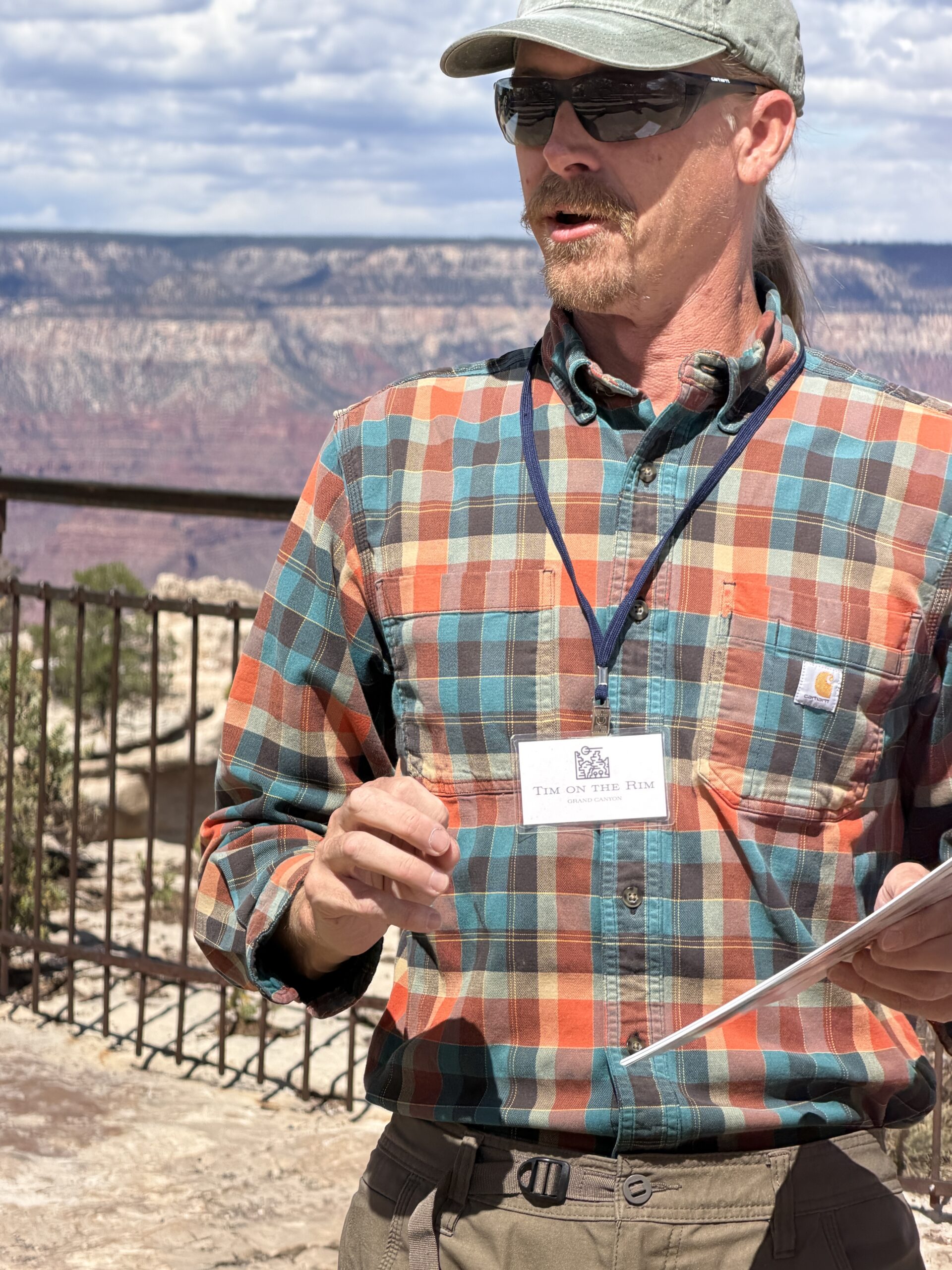
We had already been wowed by the Grand Canyon. Then geologist Tim Wilson stood at the rim and showed us that the rocks in front of us were telling a story more than a billion years old.
Some places you can appreciate without knowing much about them, and the Grand Canyon is certainly one of them. When Linda and I first reached the rim during our Insight Vacations tour of the American West, my reaction was simple: what an awesome experience.
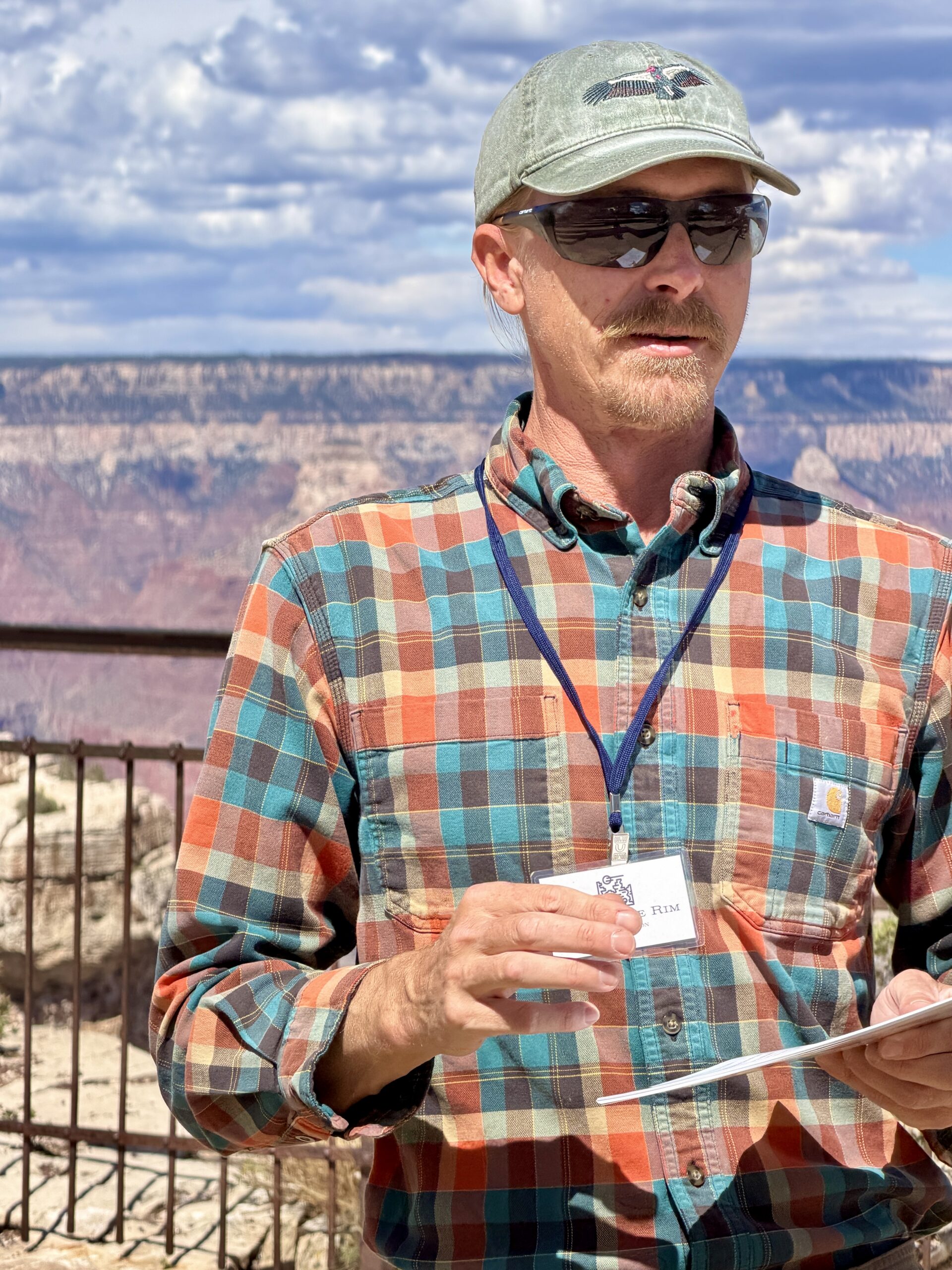
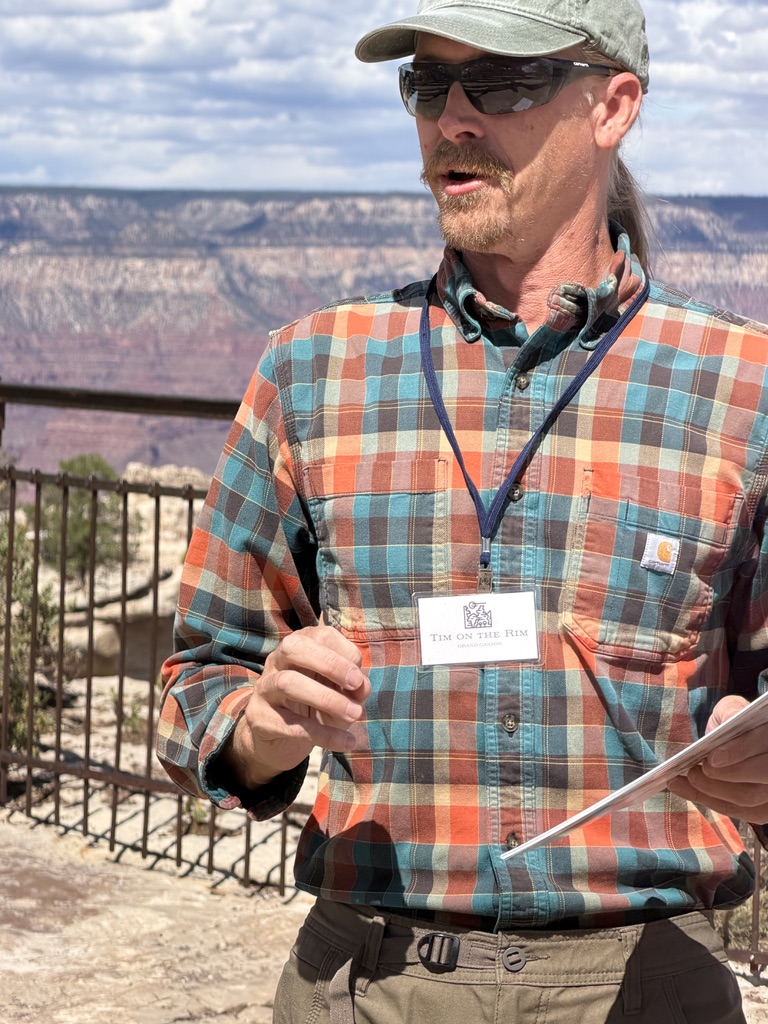
You don’t need to understand geology to be overwhelmed by the Grand Canyon. But as we discovered later that day, understanding a little geology makes the experience even better. That’s when our group met Tim Wilson, better known as Tim "on the Rim."
The Grand Canyon Became His Classroom
After a picnic lunch at Mather Point, our group gathered with the canyon spread out behind Tim. Before he began, I asked whether he’d mind if I recorded his presentation on my iPhone. He agreed, which was fortunate because he packed an extraordinary amount of information into his talk.
His challenge was considerable: explain nearly two billion years of geological history to a group of tourists standing outdoors and keep us interested. He did, partly because he doesn’t take himself too seriously.
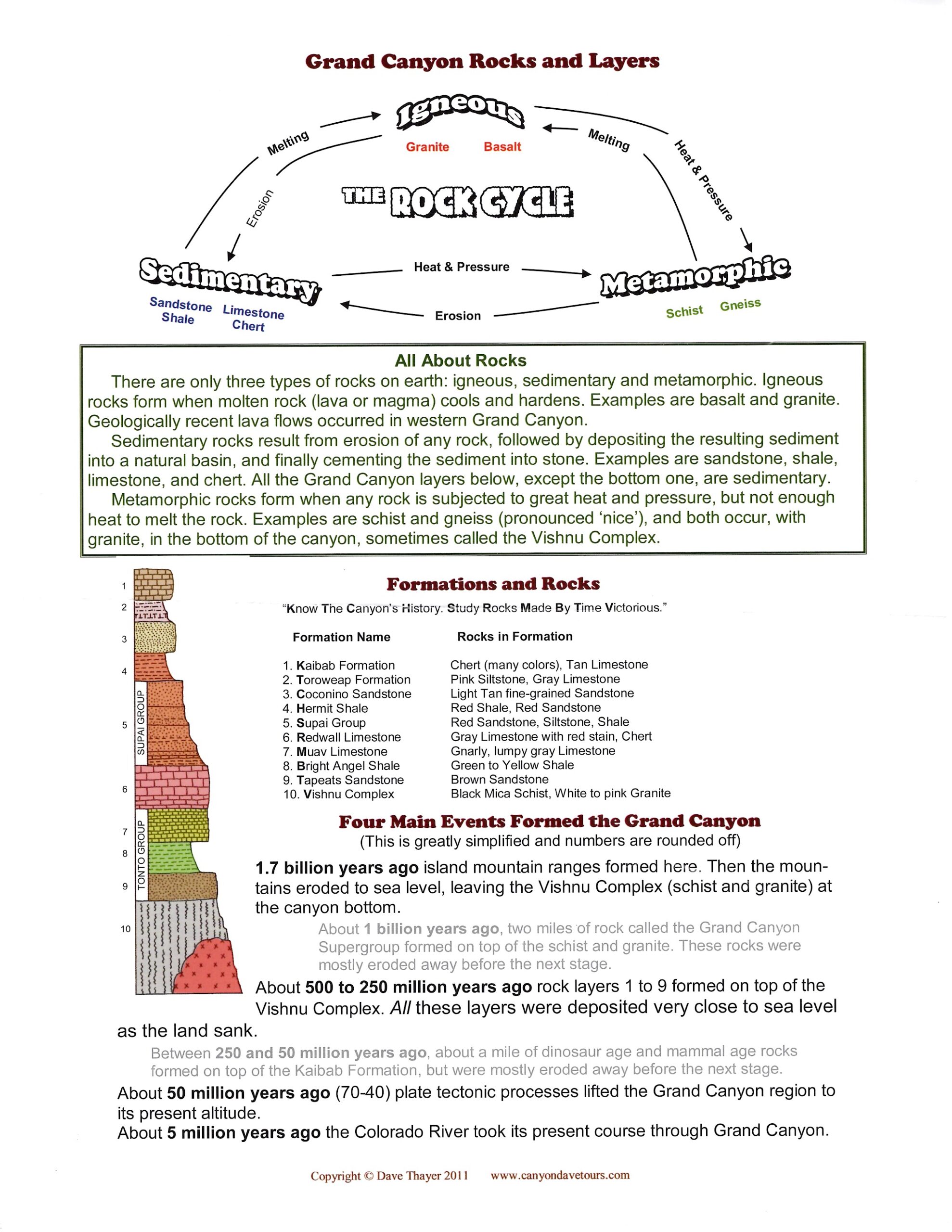
Tim introduced the three basic types of rock as "ignorant rocks, moronic rocks and sedentary." Then he checked his notes: igneous, metamorphic and sedimentary.
We laughed.
Then he started teaching us geology.
Those Stripes Aren’t Just Pretty Colors
Most visitors immediately notice the horizontal bands running across the canyon. Before Tim’s talk, I saw them mainly as part of what made the view beautiful. He taught us to see something else.
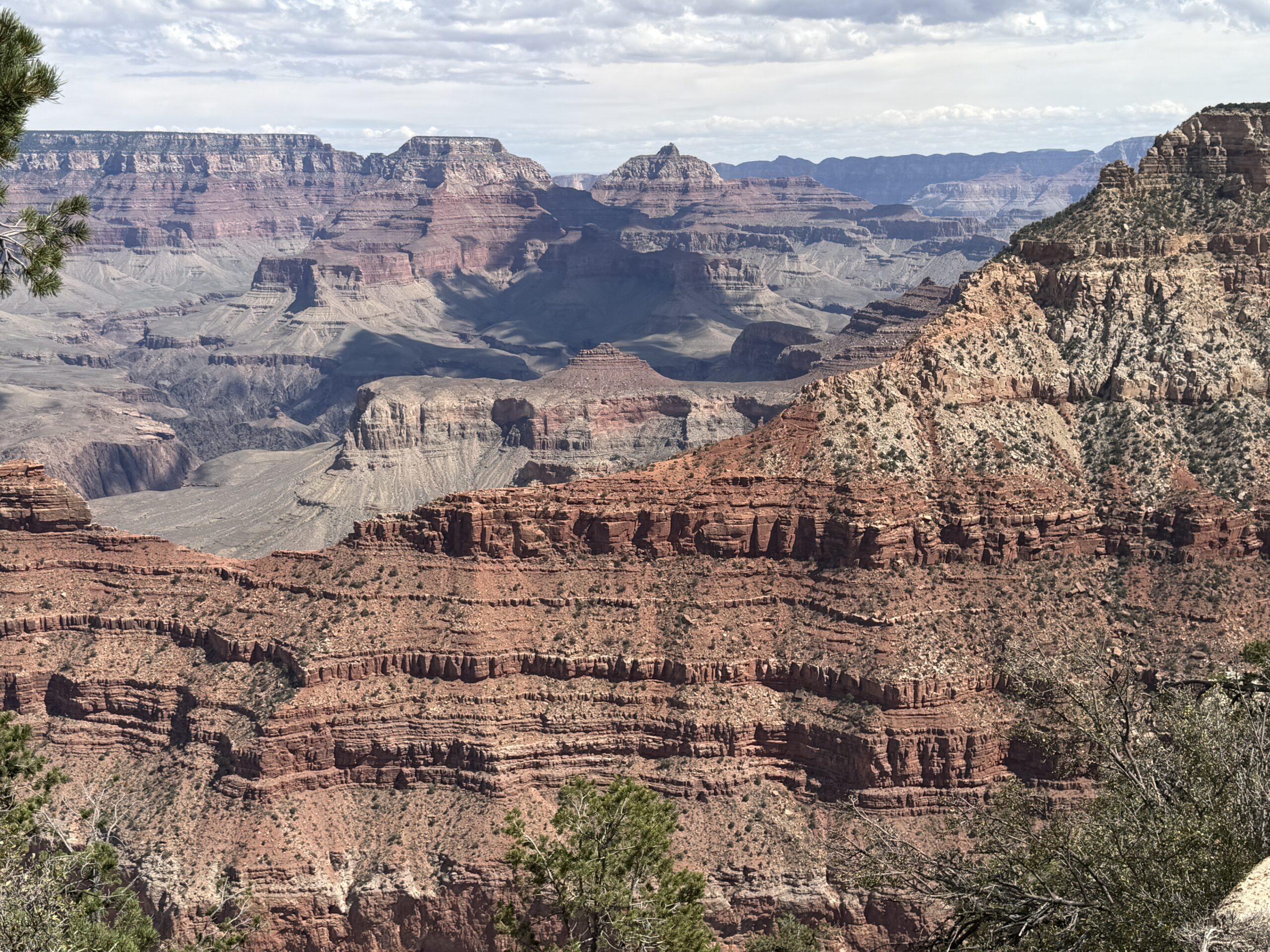
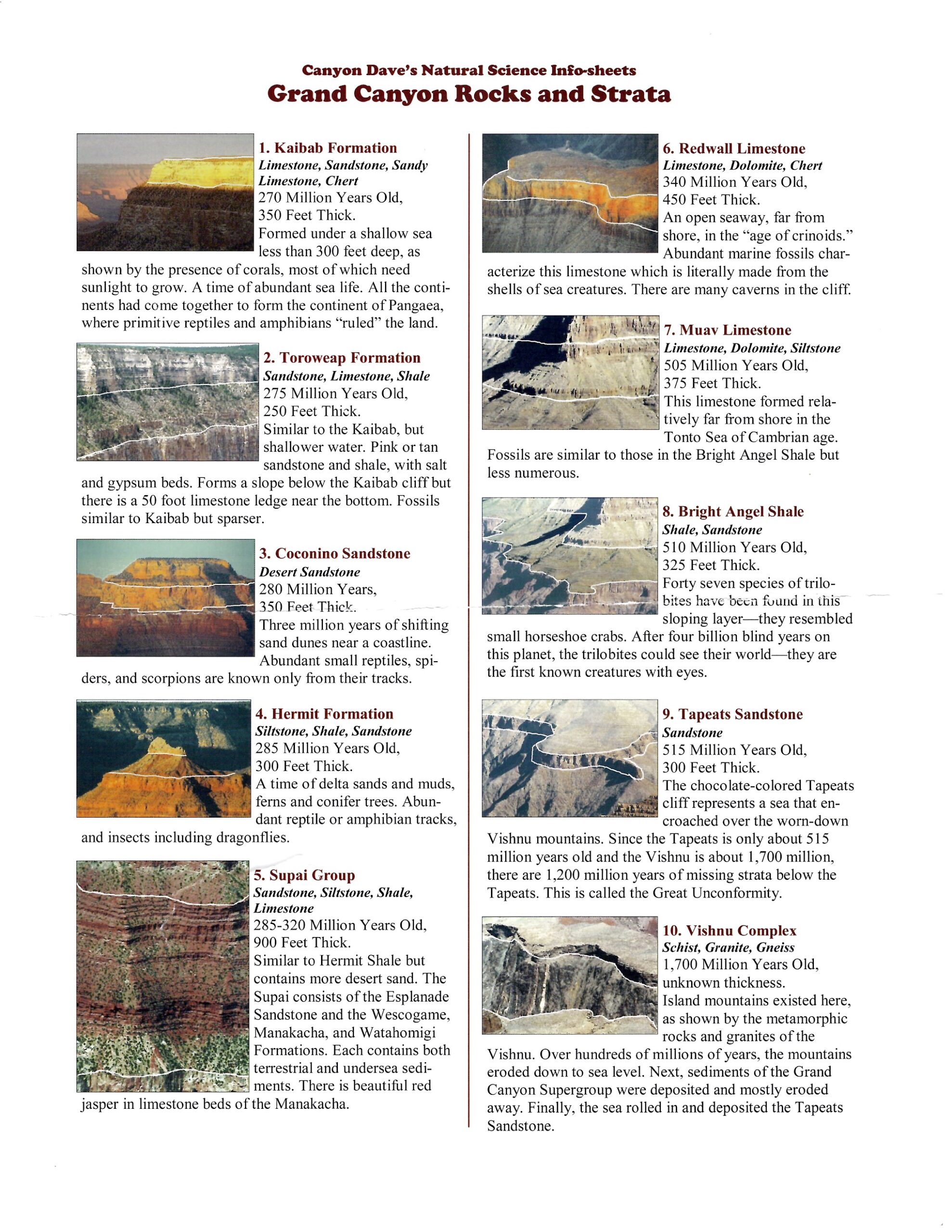
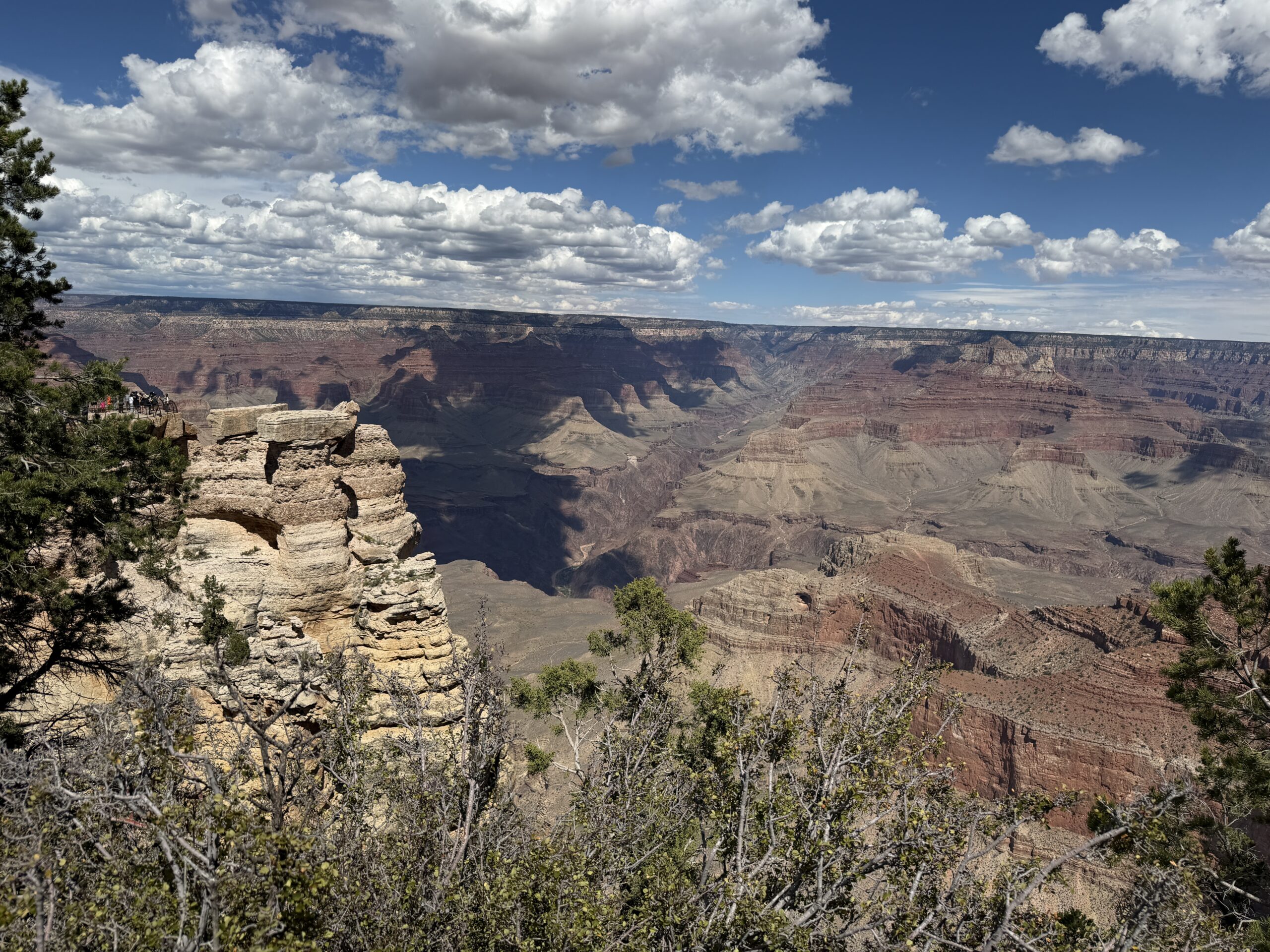
Most of the prominent layers are sedimentary rock—sandstone, shale and limestone—and each records a different environment that once existed here. At various times, this landscape lay beneath an ocean, along a beach, across river deltas or under enormous desert sand dunes.
Each environment left sediment behind, and over immense periods of time that sediment became rock. Suddenly the bands across the canyon weren’t simply colors. They were different worlds stacked on top of one another.
Rocks Older Than the Dinosaurs
One of the most interesting things Tim explained was the difference between the age of the rocks and the age of the canyon. The rocks are extraordinarily old. The canyon itself is comparatively young.
Most of the sedimentary layers visible from the South Rim were already in place before dinosaurs walked the Earth, so you shouldn’t expect to find dinosaur fossils in the canyon’s main exposed layers.
That doesn’t mean the rocks lack fossils. Tim told us about evidence of worms, trilobites, corals, sea sponges, fish, plants, reptiles and amphibians preserved in different layers. He also described fossil tracks from spiders and scorpions and evidence of enormous prehistoric dragonflies.
The Kaibab Formation at the top of the canyon contains marine fossils, including shark teeth. Think about that for a moment: we were standing roughly 7,000 feet above sea level in Arizona, on rock containing evidence of an ancient sea.
The Oldest Rocks Are Way Down There
Then Tim directed our attention toward the bottom of the canyon.
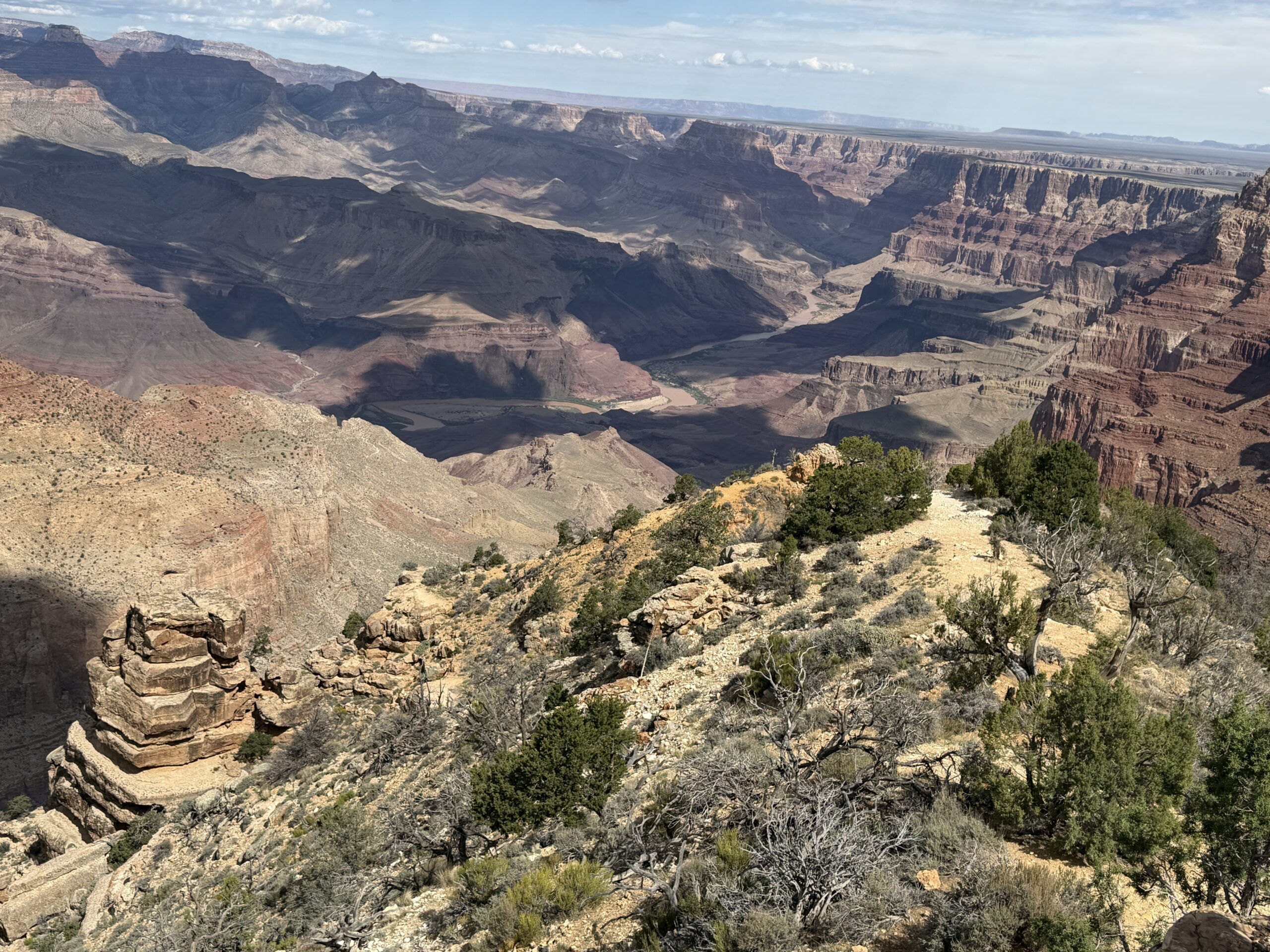
Far below us lies the Vishnu Complex, the foundation beneath the younger sedimentary layers. Unlike the colorful layers above, these are primarily metamorphic and igneous rocks, including schist, granite and gneiss.
Tim explained that much of the Vishnu Complex is more than 1.5 billion years old, with some rocks approaching 1.85 billion years. That’s more than a third of the age of Earth itself.
Tim had brought samples of granite, schist, sandstone and limestone, which made all of this much easier to grasp. Instead of just hearing names we’d probably last encountered in a science class decades ago, we could look at the rocks and then look out at where they occur in the canyon.
He also couldn’t resist another rock joke. Gneiss, he told us, was "a nice rock."
Then came his warning: "Just don’t take it for granite."
The Rocks Are Ancient. The Canyon Is Young.
This was the part that initially seemed backward. If some of the rocks are nearly two billion years old, how can the Grand Canyon itself be young?
Because the canyon and the rocks aren’t the same age.
Tim compared the Colorado River to a saw cutting downward through the landscape and a conveyor belt carrying loosened material away. He explained that the modern Grand Canyon began taking shape roughly five to six million years ago, although scientists continue to study parts of its earlier history.
That’s ancient on a human time scale. Geologically, it’s practically yesterday. Tim called the Grand Canyon a young, or immature, geological feature.
The River Didn’t Do It Alone
The common shorthand is that the Colorado River carved the Grand Canyon. That’s true but incomplete.
Water alone doesn’t gouge through solid rock like a knife. During floods, the river carries sand, gravel, rocks and sometimes boulders. The smaller material works like liquid sandpaper against the riverbed, while larger rocks behave more like jackhammers, bouncing and scraping along the bottom. The river then carries the broken material downstream.
That helps explain how the canyon gets deeper. But what makes it so wide? Water and gravity play the major roles. As the river cut downward, more rock was exposed along the sides. Groundwater, flash floods and cycles of freezing and thawing weakened those walls until gravity took over, sending rockslides and landslides toward the bottom, where the river could carry some of the material away.
It’s still being created.
The Side Canyons Have Their Own Story
A member of our group asked why so many parts of the canyon seem to branch away from the Colorado River. Tim explained that many are side canyons created by drainage and flash flooding, and he pointed to Bright Angel Canyon as an example.
That had special meaning for us. A major flood had recently damaged water infrastructure there, and Tim pointed out the visible flood-scour scar.
The resulting water problems had affected lodging at the South Rim. We had been scheduled to stay inside Grand Canyon National Park, but our group had to stay outside it instead.
The forces Tim was describing weren’t confined to the distant geological past. During our September 2026 visit, they had changed our own itinerary.
Why Are the Layers So Flat?
Another question concerned something almost everyone notices once it’s pointed out: why are the rock layers so remarkably straight?
Tim explained that during much of the Paleozoic Era, this region remained relatively flat while sediment accumulated layer after layer. Much later, tectonic forces pushed the entire region upward to create the Colorado Plateau.
The uplift was relatively gentle, so instead of crumpling into mountains, much of the sequence stayed essentially flat.
Imagine lifting an enormous layer cake straight up without tipping it, then letting a river and millions of years of erosion cut into it. That’s an oversimplification, but it helped me picture what happened.
More Than a Billion Years Missing
Tim’s handout included another fascinating feature: the Great Unconformity.
At places in the Grand Canyon where younger horizontal sedimentary rocks lie directly on the ancient Vishnu basement rocks, roughly 1.2 billion years of Earth’s history isn’t recorded in the rocks between them.
Rock formed, mountains rose and erosion wore them away. Much later, new sediment accumulated on top. The canyon doesn’t give us one continuous history of Earth. Some chapters are missing.
How Do Geologists Know How Old the Rocks Are?
Then came a question I’d been wondering about myself: how can anyone know that a particular rock is 500 million—or 1.7 billion—years old?
Tim’s answer was radiometric dating.
Certain naturally occurring elements change at predictable rates through radioactive decay. By measuring those elements and their decay products in a rock, scientists can estimate when it formed.
Fossils provide additional clues for sedimentary rocks, and volcanic rocks can preserve magnetic information that helps scientists reconstruct their history. Geologists aren’t simply looking at a layer and saying, "That looks really old." There’s measurable evidence behind the dates.
Eventually There Won’t Be a Grand Canyon
One of the younger members of the audience asked whether the Grand Canyon would ever become flat again.
Tim’s answer was yes. Erosion hasn’t stopped, so the canyon will keep widening and its steep walls will gradually retreat and soften.
Given enough millions of years, Tim joked, future visitors may be coming to "Grand Valley National Park" instead.
None of us needs to change our travel plans just yet.
The Best Geology Lesson I’ve Ever Had
What struck me most about Tim’s presentation wasn’t any single fact. It was that afterward, the Grand Canyon looked different to me.
Before the talk, I saw an enormous, beautiful canyon with bands of different-colored rock.
Afterward, I saw ancient oceans.
Beaches.
River deltas.
Deserts.
Mountains that had disappeared.
A plateau pushed thousands of feet upward.
A river cutting downward.
Flash floods carving sideways.
Gravity pulling the walls apart.
And at the bottom, rocks that had existed for more than a billion and a half years before Linda and I ever stood there looking at them.
That’s quite a lot to get out of an afternoon geology lesson.
Seeing the Geology on Your Own
Our presentation with Tim was arranged through Insight Vacations, but you don’t need a private guide to begin understanding what you’re seeing at the South Rim.
The Yavapai Geology Museum sits right on the rim at Yavapai Point. Large picture windows overlook the canyon, while exhibits help visitors identify the rock layers and understand the deposition, uplift and erosion that created the landscape.
Nearby is the Trail of Time, a paved interpretive walk along the Rim Trail. Along the main timeline, each meter represents one million years of Earth’s history. Rock samples and exhibits along the way help connect the timeline beneath your feet with the layers visible across the canyon. The National Park Service describes the main timeline as accessible, making it a good option for visitors who want to explore the geology without hiking below the rim.
The National Park Service also offers ranger programs. During our September 2026 visit, a free 30-minute geology talk was offered daily at Yavapai Geology Museum. Programs and schedules can change, so check the National Park Service website for current information.
Want to Explore the Grand Canyon With Tim?
Tim also operates his own private guiding business, Tim on the Rim.
His offerings range from a paved Trail of Time walking tour along the South Rim to more demanding guided hikes on Bright Angel, South Kaibab, Grandview and Hermit trails. His interpretation goes beyond geology to include ecology, history and Indigenous cultures.
Tim later gave me written permission to use the photographs and recording I made during his presentation. When I emailed afterward to thank him, he said he was glad we’d enjoyed the talk and encouraged us to reach out if we return to the Grand Canyon.
I think we might take him up on that someday.
After an afternoon with Tim on the Rim, I learned something I hadn’t expected.
Seeing the Grand Canyon is extraordinary.
Understanding what you’re looking at makes it even better.